

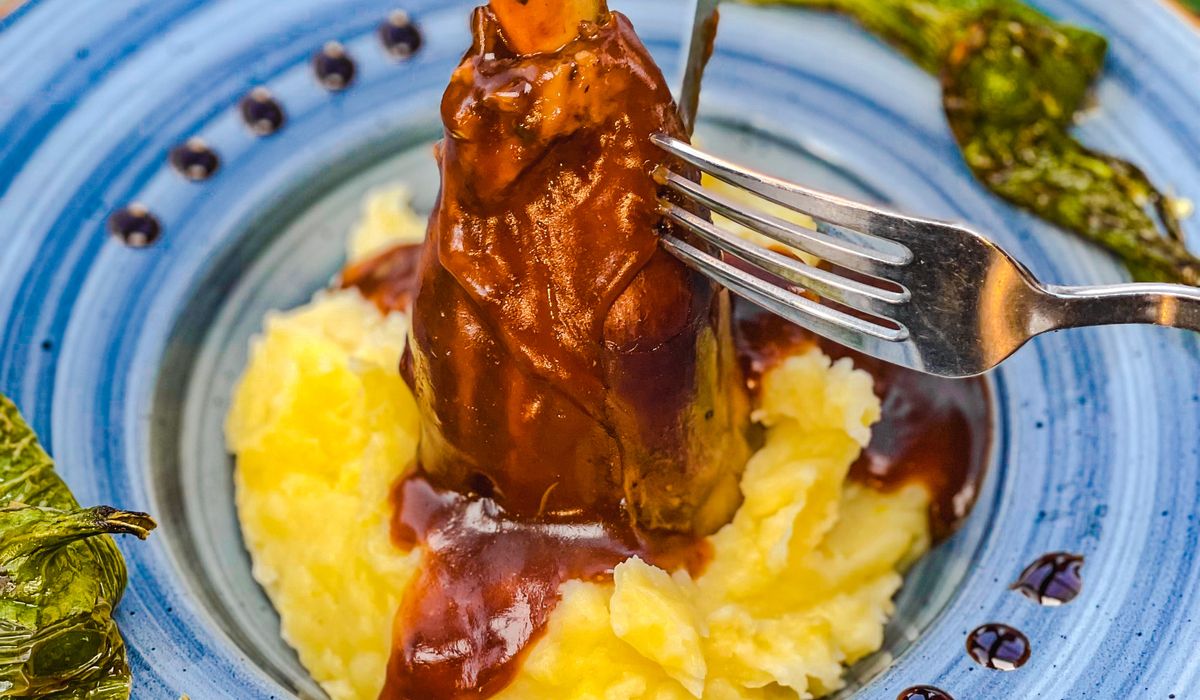
Few things say Sunday quite like a whole roast chicken, and few things disappoint quite like a dry one. The difference between the two usually comes down to two things: a decent bird and a generous hand with the butter. Get those right and you will be rewarded with crisp, burnished skin, meat that stays juicy to the bone, and a roasting tin full of gravy-worthy juices.
Start With a Good Bird
Before you think about herbs or oven temperatures, talk to your butcher. A whole chicken weighing around 1.5kg to 2kg will comfortably feed four with leftovers for sandwiches the next day. Ask what is hanging that week — a free-range or organic bird will have a firmer texture and far more flavour than a standard supermarket one, and a corn-fed bird gives you that deep golden skin.
While you are there, make two small requests that will pay you back later:
- Ask them to remove the wishbone. It takes them seconds and makes carving the breast far easier.
- Ask for the neck and giblets, if they have them, for the gravy. If not, a tub of good chicken stock will do.
Leave the bird untrussed, so the heat circulates around the legs and they cook evenly. Take it out of the fridge a good 45 minutes before it goes in the oven — cold meat in a hot oven cooks unevenly.
Make the Herb Butter
You want roughly 100g of unsalted butter, softened to room temperature but not melted. Melted butter runs straight out from under the skin; soft butter stays where you put it. Mash it with a fork along with:
- A small handful of soft herbs, finely chopped — flat-leaf parsley, tarragon, chives and a little thyme work beautifully
- Two garlic cloves, grated or crushed to a paste
- The finely grated zest of one lemon
- A good pinch of sea salt and plenty of freshly ground black pepper
Mix until you have a rough green paste. You can make this days ahead, roll it into a log in cling film, chill it, and slice off what you need. It also freezes well, so it is worth making double.
Getting the Butter Under the Skin
Pat the chicken dry all over with kitchen paper — dry skin is the secret to crackling, golden skin. Now work your fingers gently between the skin and the breast meat, starting at the neck end, easing the skin away without tearing it. Push two-thirds of the herb butter into that pocket and spread it flat from the outside with your palm. Do the same over the tops of the legs, where the skin is looser.
Rub whatever is left over the outside of the bird, then season the skin generously with sea salt. Put half a lemon, a bashed garlic clove and a few thyme sprigs inside the cavity — not packed tight, just enough to perfume the meat. Sit the chicken on a bed of halved onions, carrots and a few potatoes in the roasting tin, which keeps it off the base and gives you a head start on the gravy.
Roasting Times and Temperatures
Heat the oven to 190°C (170°C fan, Gas 5). The reliable rule for a chicken at this temperature is 20 minutes per 450g, plus 20 minutes over. A 1.8kg bird therefore wants around 1 hour 40 minutes.
- 1.5kg — about 1 hour 25 minutes
- 1.8kg — about 1 hour 40 minutes
- 2kg — about 1 hour 50 minutes
Baste once, about halfway through, and resist opening the oven door beyond that. If the skin is browning too quickly, lay a piece of foil loosely over the breast rather than turning the heat down. The chicken is done when a thermometer pushed into the thickest part of the thigh reads 74°C, or when the leg wobbles freely in its socket.
Rest It, Then Check the Juices
This is the step most people rush, and it is the one that keeps the meat moist. Lift the bird onto a warm plate, tent it loosely with foil — not wrapped tight, or the skin will steam and soften — and leave it for 20 to 30 minutes. The internal temperature will continue to rise a few degrees as it sits, and the juices will settle back into the meat rather than flooding the board.
To be certain it is cooked, pierce the thickest part of the thigh with a skewer. The juices should run completely clear, with no trace of pink. If they are pink, return the bird to the oven for another 10 minutes and check again. Clear juices plus rested meat equals a properly cooked chicken.
Gravy, Carving and the Day After
Spoon off most of the fat from the roasting tin, leaving a couple of tablespoons behind. Set the tin over a low heat on the hob, stir in a tablespoon of plain flour and cook it out for a minute, then splash in a little white wine, cider or stock and scrape up every sticky brown bit. Add the giblet or chicken stock, simmer until it coats a spoon, and season. Strain if you like it smooth.
Carve the legs off first, then slice the breast against the grain. Serve with the roasties from the tin and something sharp — a spoonful of mustard, a squeeze of lemon, or a winter slaw.
And do not throw the carcass away. Cover it with cold water, add an onion, a carrot, a bay leaf and a few peppercorns, and simmer gently for two to three hours. Strain it and you have a stock that will make a risotto or a soup taste like something far greater than the sum of its parts. That, more than anything, is the quiet reward of doing a roast chicken properly.





John Doe
14 January, 2022Having no content in post should have adverse..
Chauffina Carr
10 April, 2022We use these tests all time! Killer stuff!
Jim Séchen
16 July, 2022Thanks for all the comments, everyone!