

Why Slow Cooking Works
The best stews and pot roasts rarely come from the priciest joint on the counter. They come from the muscles that worked hardest — shoulder, shin, cheek and rib — where the meat is threaded with collagen and seam fat. Cooked fast, those cuts are chewy and disappointing. Given three or four hours at a low, gentle heat, the collagen dissolves into gelatin, the fibres slacken, and you get that glossy, lip-sticking sauce no expensive steak can produce.
Understanding the chemistry pays off at the counter. Collagen needs time and moisture, not just heat. A dry oven at 200°C will only toughen the meat. A covered pot at 140–150°C, with liquid reaching halfway up the joint, gives the collagen the environment it needs to melt. Choose accordingly, and half the work is done before you switch the oven on.
How to Read a Cut in the Shop
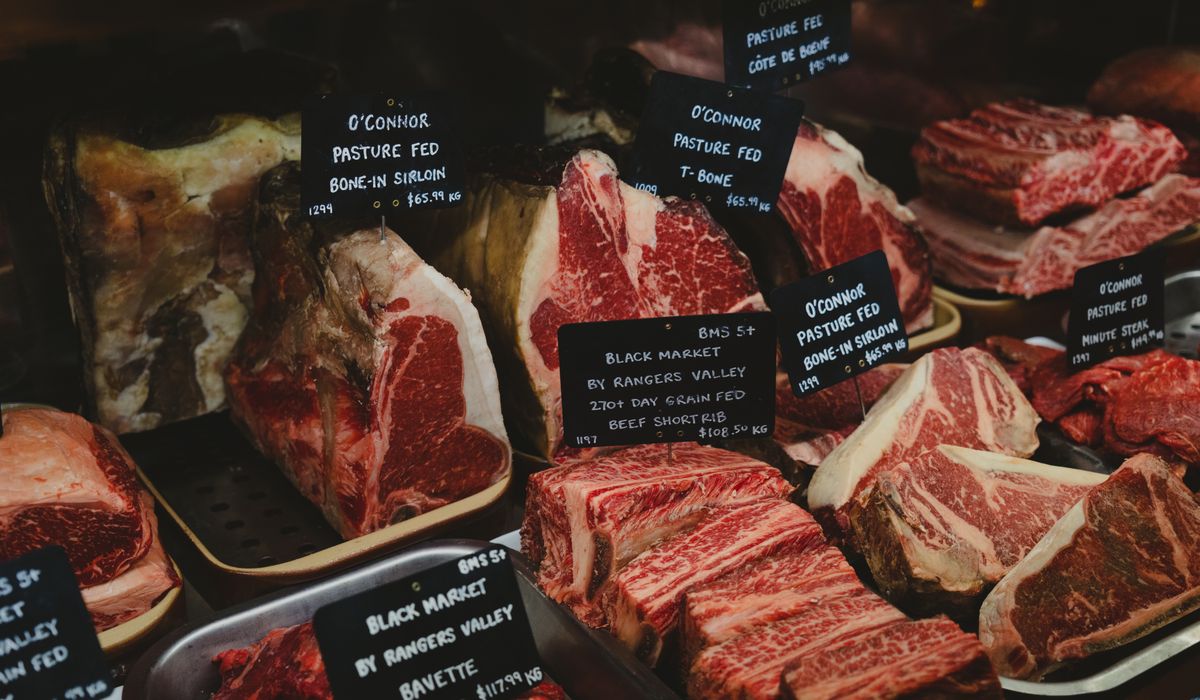
Before you read the label, look closely at the meat. Three things tell you most of what you need to know.
- Marbling. Fine threads of fat running through the muscle like frost on a window. You want creamy white or pale ivory flecks, evenly distributed rather than pooled in one spot. Bright white or yellow, tacky fat often points to an older animal or poor handling. Good marbling bastes the meat from within and carries flavour into the sauce.
- Connective tissue. Thick bands of white or yellow sinew between muscle groups are your allies — they break down into gelatin and give body to the gravy. The thin, translucent, cling-film-like sheets on the surface, often called silver skin, are elastin. They will not soften, however long you cook them, so trim them off or ask for them to be removed.
- Grain and colour. Deep, even red with a tight grain slices neatly and holds its shape in a pie. Coarse, open-grained meat pulls apart into strands, which is exactly what you want for a ragù or a shredded beef sandwich. Both are good; they simply suit different dishes.
The Cuts Worth Your Patience
A good butcher will point you towards these without hesitation. Each rewards a long, low cook for a different reason.
- Chuck and blade. The all-rounder. Deeply beefy, well marbled and forgiving. Bone-in blade makes a superb pot roast; cubed chuck is ideal for stew. Cook for 2½ to 3½ hours.
- Shin. Cross-cut rings with bone and marrow in the centre. Arguably the finest British stewing cut — rich, sticky and full of gelatin. Whole shin slow-roasted is a Sunday centrepiece in its own right.
- Ox cheek. Dark, loose-grained and intensely savoury. After three hours it eats like butter. Ask for it trimmed of the heaviest sinew.
- Short rib. Thick, bone-in and generously marbled. Braise with stout or red wine for 2½ to 3 hours, then rest — the bones add sweetness and structure.
- Brisket. Best rolled and tied with its fat cap intact. Needs four to five hours and regular basting, but turns out spoon-tender. A traditional choice for salt beef.
- Oxtail. Fiddly to eat and worth every minute. Unbeatable for soups, stews and pies where you want a sauce that sets to a jelly.
Lamb shoulder and pork shoulder behave the same way, so the principles travel well beyond beef.
What to Ask Your Butcher
A few well-chosen questions will improve your cooking more than any gadget.
- "Is this bone-in?" Bone adds flavour, gelatin and a little natural insulation against overcooking.
- "How thick is it cut?" For stewing, ask for roughly 4cm chunks. Anything smaller will disintegrate over three hours.
- "Has it been aged, and for how long?" Twenty-one to twenty-eight days of dry ageing deepens flavour and tenderises the fibres.
- "What's good value this week?" Butchers know which cuts are plentiful and which are priced keenly.
- "Could you trim and saw this for me?" A whole shin cut into osso buco-style rings, silver skin removed, sinew kept for stock — that is service worth paying for.
Getting the Cook Right
Technique matters as much as the cut. Pat the meat dry and brown it properly in a heavy casserole, working in batches so the pan never crowds and the pieces colour rather than steam. Take your time here; those dark crusty patches are the foundation of the final sauce.
Deglaze with wine, ale, cider or stock, scraping up every bit of fond from the base. Then add liquid only until it reaches halfway up the meat — submerged beef boils and turns stringy. Cover and cook at 140–150°C (130–140°C fan, Gas 1–2). A slow cooker on low works too, but use less liquid still, since nothing evaporates.
Judge doneness with a skewer, not the clock. When it slides in with no resistance, the meat is ready. Season with salt early, but save the acid — a splash of vinegar, a spoon of Worcestershire sauce or a squeeze of lemon — for the last few minutes, when it lifts the whole dish.
Building Flavour Over Time
If you can, cook a day ahead. Cool the pot quickly, refrigerate overnight, then lift off the set fat in one clean layer. The flavour deepens noticeably, the sauce thickens, and reheating gently on the hob takes ten minutes. Any leftovers improve further, and the shredded meat makes exceptional pies, pasties and hash. Slow cooking is not just about tenderness — it is about giving a modest cut the time it needs to taste like far more than it cost.



John Doe
14 January, 2022Having no content in post should have adverse..
Chauffina Carr
10 April, 2022We use these tests all time! Killer stuff!
Jim Séchen
16 July, 2022Thanks for all the comments, everyone!