

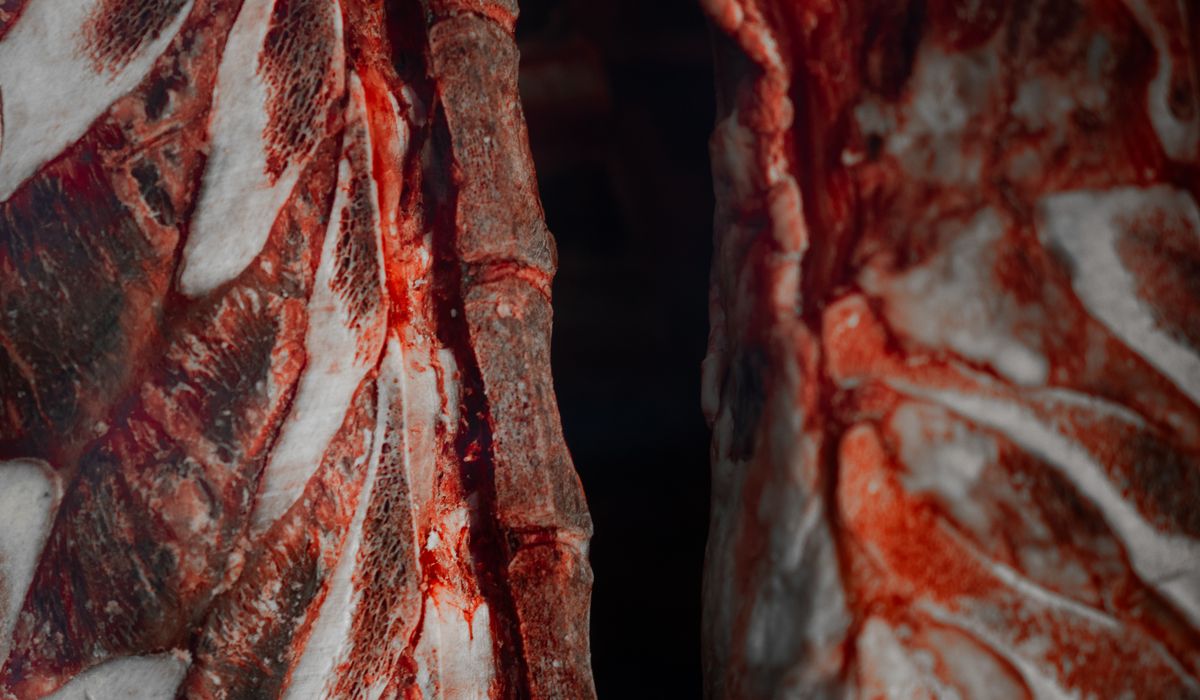
Why Pork Belly Rewards a Little Patience
Pork belly is one of the great cuts of British butchery. It carries a generous layer of fat, a ribboned streak of lean, and a thick cap of skin that, treated properly, turns into crackling worth fighting over. It is also forgiving in a way that loin and chop are not — the fat bastes the meat as it cooks, so the joint stays juicy even if you overshoot the timer slightly.
The catch is the skin. Get it wrong and you end up with leather: chewy, pale and stubborn. Get it right and you get a glassy, deep amber crust that shatters under a knife. The difference comes down to three things — how the skin is scored, how dry it is, and how the heat is applied.
Ask your butcher for a piece with a good, even layer of fat beneath the skin. Around 1.5kg will comfortably feed four to six people. If you can, have them score the skin for you; a proper butcher's knife does it in seconds and cuts through the skin without sawing into the meat.
Scoring and Drying: The Two Steps That Matter Most
If you are doing it yourself, use a very sharp knife and cut parallel lines about 1cm apart, running across the width of the joint. Cut through the skin and just into the fat beneath — perhaps 5mm deep. Do not cut into the lean. Turn the joint and score the other way if you fancy a diamond pattern, which looks handsome and helps the fat render more evenly.
Now the part most people rush: drying. Pat the skin thoroughly with kitchen paper, then leave it uncovered in the fridge, skin side up, for at least a few hours and ideally overnight. This draws moisture out of the surface. Moisture is the enemy of crackling — while it remains, the skin steams rather than crisps.
When you are ready to cook, dry it once more. Rub the skin with a little oil and a generous amount of fine sea salt, working it into the scores. Salt draws out a final bit of moisture and seasons the crust. Be cautious with salt if your butcher has already brined or salted the meat.
- Score evenly — 1cm apart, through skin and shallow into the fat.
- Dry overnight — uncovered in the fridge, skin side up.
- Salt the skin — fine sea salt rubbed into the scores, not coarse stuff that just sits on top.
High Heat First, Gentle Heat After
Preheat your oven to 220°C (200°C fan, gas 7). Place the belly on a rack inside a roasting tin so the air circulates underneath, or sit it directly on a bed of roughly chopped onion, carrot and a few sprigs of thyme if you want the vegetables to catch the drippings. Just make sure the meat, not the skin, is sitting on them — the skin should stay clear and exposed.
Roast at that high heat for 25 to 30 minutes. Watch the skin closely: it should begin to blister and turn a pale golden colour. This is the moment the crackling sets. Do not walk away — ovens vary and a skin can go from golden to black in a matter of minutes.
Once the skin has puffed, drop the temperature to 160°C (140°C fan, gas 3) and continue cooking for roughly 1.5 to 2 hours, depending on the thickness of the joint. The meat should be yielding, almost spoonable, and the fat should have rendered down considerably. A probe thermometer pushed into the lean reads around 85–90°C when it is properly tender.
Rescuing Crackling That Refuses to Crisp
It happens. You pull the joint out, the meat is perfect, and the skin is disappointingly bendy. Do not panic and do not blast it under a grill while the meat is still attached — you will dry out the lean before the skin catches.
The neat trick is to carve the crackling off in one piece, lay it flat on a baking tray, and return it to a hot oven at 220°C for 8 to 10 minutes. It will crisp up beautifully. Meanwhile, keep the meat covered loosely with foil to rest.
If the skin is very pale and damp rather than merely soft, pat it dry and sprinkle on a little more salt before it goes back in.
- Bendy skin? Remove it, lay it flat, and finish it separately at high heat.
- Rest the meat — 20 minutes under loose foil lets the juices settle.
- Carve across the scores — you will get neat rectangles of crackling with each slice.
What to Serve and What to Ask Your Butcher
Pork belly loves something sharp and something sweet. A spoonful of apple sauce, a mustardy vinaigrette over bitter leaves, or a pile of braised red cabbage all cut through the richness. Roast potatoes done in the rendered fat are almost obligatory, and a simple gravy made from the tin juices loosened with a splash of cider does the job handsomely.
If you are buying from a local butcher, ask about provenance and breed — rare breeds such as Berkshire or Middle White are worth the extra few pounds for their deeper flavour and well-marbled fat. Ask, too, whether the skin is dry or wet-cured, because that changes how you season it at home.
Above all, do not be intimidated. Pork belly is a cut that asks for a little forethought the night before and very little skill on the day. Dry the skin, score it neatly, start hot, finish low, and you will be rewarded with meat that falls apart and crackling that sings.





John Doe
14 January, 2022Having no content in post should have adverse..
Chauffina Carr
10 April, 2022We use these tests all time! Killer stuff!
Jim Séchen
16 July, 2022Thanks for all the comments, everyone!