

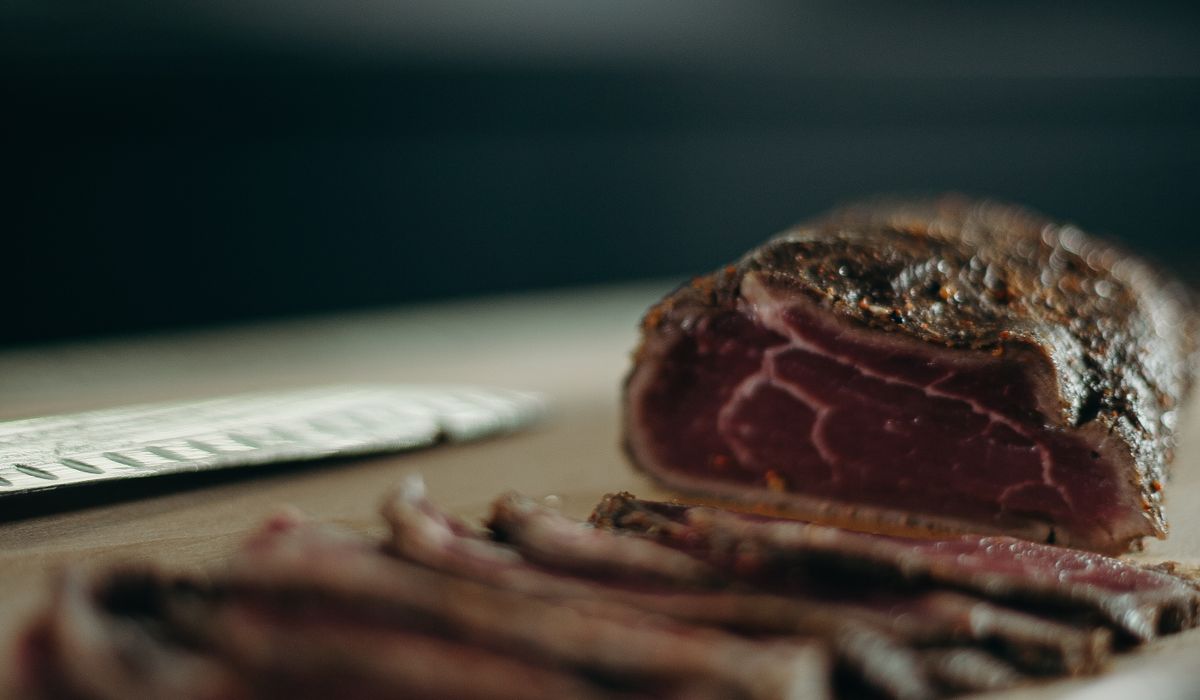
Lamb chops are one of the great treats of the British butcher's counter, and they are far easier to cook well at home than many people imagine. You do not need a garden, a barbecue or any special kit. A heavy frying pan or the grill in your oven will do a superb job, and once you know a few simple rules you will be turning out chops with a dark, savoury crust and a juicy pink middle every time.
Choosing Your Chops at the Butcher's
The cut you buy shapes how you cook it. Loin chops are the neat, lean ones with a little kidney attached, and they respond beautifully to fast, high heat. Barnsley chops are double loin chops, generous and impressive, and they need just a touch longer. Best end of neck chops, sometimes sold as rack chops or cutlets, are sweet and tender and take minutes. Chump chops are thicker and meatier, closer in character to a small steak.
Ask your butcher for chops of even thickness, ideally around 2.5cm (an inch). Uneven chops cook unevenly, and by the time the thick end is right the thin end is grey and dry. Look for fat that is creamy white rather than yellow, and a good marbling through the meat. A little fat is not a fault; it is where much of the flavour lives. If you can, buy chops that have been hung properly, as the flavour will be noticeably deeper.
Season Simply and Bring to Room Temperature
Lamb has a lovely natural sweetness and a faint grassy note, and it does not need much help. Take the chops out of the fridge half an hour before cooking so they lose the chill. Cold meat in a hot pan steams rather than sears, and you lose the crust that makes a chop worth eating.
Pat the surface dry with kitchen paper. Season generously with fine sea salt and a good grind of black pepper on both sides, and rub it in with your fingers. That is genuinely enough. If you want a little more, a few sprigs of rosemary or thyme thrown into the pan, a bruised garlic clove, or a knob of butter at the end will lift things without burying the lamb. Avoid wet marinades for chops you plan to pan-fry, as the sugar and liquid will burn before the meat is cooked.
Pan-Frying: The Best Method for Most Chops
Choose a heavy-based frying pan, ideally cast iron or stainless steel with a thick base. Put it on a medium-high heat and let it get properly hot before anything goes in. Add a thin film of a neutral oil with a high smoke point, such as rapeseed or groundnut. Butter alone will burn; save it for basting at the end.
Lay the chops in the pan away from you so any spitting goes the other way, and do not crowd them. If you are cooking four chops, use two pans or cook them in batches. Crowding drops the pan temperature and you end up with stewed meat.
- For a 2.5cm chop, cook for 2 to 3 minutes on the first side until deeply browned.
- Turn once and cook for 2 to 3 minutes on the second side for pink, or 4 minutes for medium.
- Stand the chop on its fat edge for 30 seconds using tongs, so the fat renders and crisps.
- Add a knob of butter and a sprig of thyme in the final minute and spoon the foaming butter over the meat.
If you have a probe thermometer, pink lamb is around 54 to 57°C in the centre, and medium is 60 to 63°C. Remember the temperature will rise a few degrees as it rests.
Grilling Under the Oven Grill
Grilling is excellent when you are cooking several chops at once, and it gives a lovely charred edge. Set the grill to its highest setting and let it heat for a full ten minutes. Line the grill pan with foil for easy washing up, and sit the chops on the rack so the fat can drip away.
Position the chops about 10cm from the element. Grill for 3 to 4 minutes on the first side, turn, and grill for another 3 to 4 minutes. Thicker chump or Barnsley chops may need 5 minutes a side, or a couple of extra minutes on a lower shelf. Keep the door ajar if your grill has a rest position, and never wander off: lamb goes from nicely charred to acrid in under a minute.
Rest, Then Serve
Resting is the step most home cooks skip, and it is the one that makes the biggest difference. Take the chops out of the pan or from under the grill and leave them on a warm plate, loosely covered with foil, for 5 minutes. During that time the juices redistribute through the meat, so they end up on your plate rather than running out at the first cut.
Serve with something sharp to cut through the richness: mint sauce, a squeeze of lemon, a spoonful of redcurrant jelly, or a simple yoghurt and cucumber mixture. Buttered new potatoes, a green salad or some wilted spinach are all you need alongside. Leftover chops, if you ever have any, are excellent sliced cold in a sandwich the next day.


John Doe
14 January, 2022Having no content in post should have adverse..
Chauffina Carr
10 April, 2022We use these tests all time! Killer stuff!
Jim Séchen
16 July, 2022Thanks for all the comments, everyone!